Google’s AI Revolutionizes Ad Formats: What Marketers Need to Know
The Dawn of AI-Powered Advertising on Google
Google has consistently been at the forefront of digital advertising innovation, and its latest strides in artificial intelligence (AI) are fundamentally reshaping how businesses connect with their audiences. With AI now deeply integrated into its advertising platforms, Google is introducing a suite of new ad formats and enhancements designed to deliver unparalleled efficiency, personalization, and performance. For digital marketing professionals, PPC specialists, SEO experts, and business owners alike, understanding these advancements isn’t just beneficial—it’s imperative for staying competitive in an increasingly intelligent advertising landscape.
AI is no longer just a buzzword; it’s the engine driving smarter ad creation, more precise targeting, and real-time optimization. These new AI-powered formats promise to free up valuable time from manual tasks, allowing marketers to focus on higher-level strategy, creative ideation, and deeper audience understanding. However, leveraging this power requires a strategic shift and a keen eye for effective implementation.
Unpacking Google’s New AI-Driven Ad Formats
Google’s commitment to AI-first advertising manifests in several key areas, each designed to elevate campaign performance and advertiser experience.
Enhanced Responsive Search Ads (RSAs)
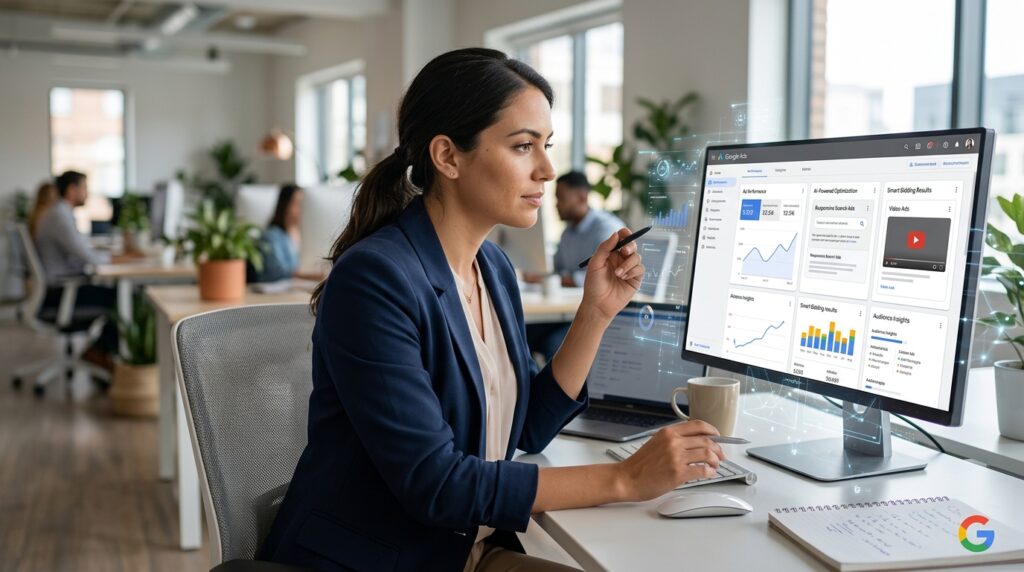
Responsive Search Ads have long been a staple, allowing advertisers to provide multiple headlines and descriptions, which Google then combines to create the most relevant ad. With new AI enhancements, this process is hyper-optimized. Google’s AI now leverages sophisticated machine learning to test even more combinations, predict which messages resonate best with specific search queries and user contexts, and automatically prioritize high-performing assets. This leads to significantly improved ad relevance, higher click-through rates, and ultimately, better quality scores.
Performance Max Campaigns with Advanced AI Capabilities
Performance Max (PMax) campaigns were already a leap forward, enabling advertisers to run campaigns across all Google channels (Search, Display, Discover, Gmail, YouTube, and Maps) from a single interface. The latest AI integrations further empower PMax by enhancing its ability to identify valuable audience segments in real-time, predict conversion likelihood, and dynamically allocate budget across channels to maximize return on ad spend (ROAS). AI now takes a more proactive role in generating creative variations and tailoring messaging based on audience signals, making PMax an even more powerful tool for holistic campaign management.
AI-Generated Creative Assets
One of the most exciting developments is Google’s capability to generate creative assets—including images and even short videos—using AI. By leveraging existing assets, product feeds, and campaign objectives, the AI can produce a diverse range of visual content that is optimized for different ad formats and audience segments. This significantly reduces the burden on creative teams, accelerates ad testing, and ensures a fresh supply of engaging visuals, leading to more impactful campaigns and improved brand recall.
Predictive Audience Segmentation and Bidding
Google’s AI is becoming increasingly adept at predictive analytics. It can now identify high-intent customer segments before they even explicitly signal their interest, based on their browsing behavior, historical data, and real-time trends. This allows for hyper-targeted advertising. Furthermore, AI-powered bidding strategies are more sophisticated than ever, optimizing bids in real-time for specific user paths, ensuring that every ad impression has the highest possible chance of conversion. This is particularly crucial in a privacy-centric world, as AI helps advertisers adapt to evolving data regulations and signal loss by finding new predictive signals.
Navigating the Impact: Strategic Adjustments for Digital Marketing Professionals
These AI advancements are not just technological upgrades; they demand a re-evaluation of current marketing strategies.
For PPC & Google Ads Specialists
The role of the PPC specialist evolves from manual optimization to strategic oversight. Focus shifts to providing high-quality inputs (ad copy, images, videos, product feeds), defining clear campaign goals, and meticulously analyzing the AI’s performance reports. Understanding the “why” behind AI’s decisions becomes paramount, transforming specialists into strategic partners who guide the AI towards optimal outcomes.
For SEO Professionals
The synergy between organic and paid strategies intensifies. Insights gleaned from AI-powered ad campaigns—such as top-performing keywords, audience segments, and successful creative elements—can directly inform SEO content strategy, keyword research, and on-page optimization. Understanding how AI processes information for ads can also offer clues into optimizing content for generative AI search results (AEO/GEO).
For Marketing Agencies & Business Owners
Adopting a holistic, channel-agnostic view of campaign management is crucial. Agencies and business owners should prioritize clear communication of brand values and unique selling propositions. With AI handling much of the optimization, the focus can shift to robust audience understanding, compelling brand storytelling, and ensuring that landing page experiences align perfectly with the AI-driven ad journey to maximize ROI.
For E-commerce Brands
AI-powered ads offer unprecedented opportunities for personalization at scale. E-commerce brands should focus on maintaining exceptionally clean and detailed product feeds, optimizing landing pages for conversion, and implementing robust tracking to feed the AI with accurate data. This will enable highly relevant product recommendations and dynamic retargeting efforts, driving sales and customer loyalty.
Preparing for the AI-First Advertising Future
The future of Google advertising is undeniably AI-first. To thrive in this evolving environment, digital marketers must:
- Embrace Continuous Learning: Stay updated with Google’s frequent AI advancements and understand how to best leverage them.
- Prioritize Data Quality: AI is only as good as the data it receives. Ensure your tracking is precise, and your first-party data is clean and actionable.
- Define Clear Objectives: AI needs clear goals to optimize effectively. Clearly articulate your campaign objectives and key performance indicators (KPIs).
- Experiment and Test Relentlessly: Don’t be afraid to test new AI-powered formats and strategies. A/B testing will remain crucial for refining your approach.
- Monitor and Iterate: Regularly review AI-driven campaign performance. Understand the insights provided by the AI and use them to refine your inputs and strategies.
Key Takeaways for Advertising Success in the AI Era
Google’s integration of AI into its ad formats marks a significant paradigm shift. While AI automates and optimizes with unprecedented power, it doesn’t diminish the role of human marketers. Instead, it elevates it, demanding more strategic thinking, deeper data analysis, and a renewed focus on crafting compelling brand narratives. By understanding and proactively adapting to these AI advancements, digital marketing professionals can unlock new levels of performance, efficiency, and growth in an increasingly intelligent advertising ecosystem.
Stay ahead in the AI-driven marketing era with smarter strategies from Thought Hive.
📩 connect@thought-hive.com | 📞 +91 7356018708 | 🌐 thought-hive.com