

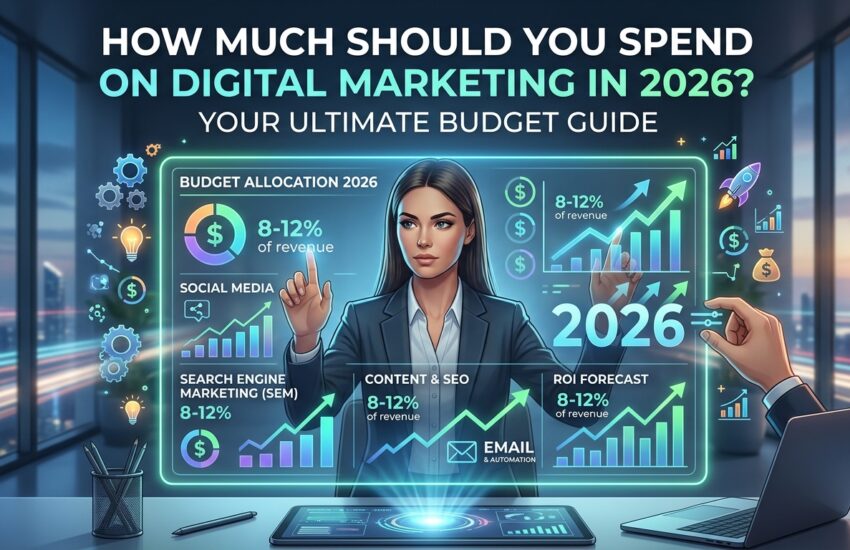
How Much Should You Spend on Digital Marketing in 2026? Your Ultimate Budget Guide for Businesses
For small and medium business owners, startup founders, and marketing managers navigating the dynamic digital landscape, the question isn’t whether to invest in digital marketing, but rather, “How much should we spend?” In 2026, with an increasingly competitive online arena, the rise of AI, and evolving consumer behaviors, a strategic digital marketing budget isn’t just an expense – it’s a critical investment in your business’s growth, lead generation, and brand awareness.
This comprehensive guide will equip you with the insights and frameworks to realistically determine your digital marketing budget, ensuring every dollar spent works harder to deliver measurable ROI.
Decoding Your Digital Marketing Budget in 2026: Why It Matters More Than Ever
The digital world of 2026 is faster, smarter, and more personalized than ever before. From e-commerce store owners vying for customer attention to B2B service providers seeking qualified leads, the digital marketing landscape presents both immense opportunities and significant challenges. Budgeting effectively means understanding that market saturation is increasing, data privacy regulations are tightening, and customer acquisition costs can fluctuate wildly. A well-planned budget isn’t just about allocating funds; it’s about setting a roadmap for performance marketing and securing your competitive edge.
Key Factors Influencing Your Digital Marketing Spend
Before you even consider numbers, a realistic budget starts with a clear understanding of what drives your marketing needs. Several critical factors will shape your spending strategy:
Your Business Goals & Growth Stage
Are you a brand-new startup aiming for rapid brand awareness and initial lead generation? Or an established SMB focused on customer retention and expanding market share? Your objectives—whether it’s driving website traffic, increasing conversions, or boosting local foot traffic (for restaurants, clinics, garages)—will fundamentally dictate your budget allocation. Aggressive growth goals typically require more substantial investment.
Industry Benchmarks & Competitive Landscape
What are your competitors doing? While you shouldn’t blindly follow, understanding industry averages for digital marketing spend can provide a valuable baseline. Highly competitive sectors often demand higher investment in paid advertising and sophisticated SEO to cut through the noise.
Target Audience Behavior & Channel Preference
Where does your target audience spend their time online? Are they B2B decision-makers on LinkedIn, local consumers searching on Google Maps, or younger demographics on TikTok? Identifying their preferred platforms will help you prioritize channels and avoid wasteful spending on platforms where your customers aren’t present.
Current Marketing Performance & Resources
Evaluate your existing digital assets (website, social media presence), historical marketing data, and in-house capabilities. Do you have a strong content library? Is your website optimized? Leveraging existing strengths can reduce immediate spending, while gaps may require additional investment.
A Channel-by-Channel Look: Where Your Digital Marketing Dollars Go
Digital marketing encompasses a diverse range of channels, each with its own cost structure and potential ROI. Understanding these will help you allocate your budget strategically.
Search Engine Optimization (SEO)
SEO is a long-term investment focused on improving your organic visibility in search engine results. Costs typically cover technical SEO audits, content creation (blogs, guides), link building, and local SEO efforts. While slower to show results, sustained SEO delivers compounding value and reduces reliance on paid ads.
Pay-Per-Click (PPC) Advertising
PPC platforms like Google Ads, social media ads (Facebook, Instagram, LinkedIn), and display ads offer immediate, highly targeted reach. Your budget here covers both the ad spend (per click, impression, or conversion) and potentially agency management fees. PPC is excellent for rapid lead generation and specific campaign goals.
Social Media Marketing
This includes both organic efforts (content creation, community management) and paid social media campaigns. While organic reach can be limited, a consistent presence builds brand loyalty. Paid social allows for precise targeting, making it a powerful tool for awareness, engagement, and direct response, especially for e-commerce businesses.
Content Marketing
From blog posts and whitepapers to videos and infographics, content marketing fuels SEO, provides value to your audience, and supports lead nurturing. Costs include content strategy, creation, editing, and distribution. High-quality content positions your brand as an authority.
Email Marketing
A cost-effective channel for nurturing leads and retaining customers, email marketing involves platforms for sending campaigns, list segmentation, and automation sequences. It’s crucial for converting prospects into customers and fostering repeat business.
Website Design & Optimization (CRO)
Your website is often the hub of your digital marketing efforts. Budgeting for ongoing website maintenance, security, design updates, and Conversion Rate Optimization (CRO) ensures your site effectively converts visitors into leads or customers.
Proven Strategies for Crafting Your 2026 Digital Marketing Budget
Once you understand the factors and channels, it’s time to apply a budgeting methodology.
Percentage of Revenue Model
Many established businesses allocate a percentage of their gross revenue to marketing. For SMBs, this often ranges from 5% to 12% of projected revenue, though aggressive growth goals might push this higher. This model offers predictability but can be less flexible for new initiatives.
Goal-Based Budgeting (Zero-Based Budgeting Approach)
This is often the most effective approach for businesses focused on ROI. Instead of starting with an existing budget, you define specific marketing goals (e.g., “acquire 500 qualified leads,” “increase e-commerce sales by 20%”) and then determine the exact resources and spending required to achieve each goal. This ensures every dollar is tied to a measurable outcome.
Competitor Benchmarking
While not a standalone strategy, understanding what your direct competitors spend can provide context. Tools exist to estimate competitor ad spend, offering insights into market intensity. Use this as a guide, not a definitive target, as your business objectives and circumstances will differ.
The 70-20-10 Rule for Innovation
A smart allocation strategy for businesses looking to innovate: 70% of your budget goes to proven, reliable tactics (like core SEO or established PPC campaigns). 20% is allocated to emerging strategies and channels (e.g., new social media platforms, interactive content). The remaining 10% is for experimental, high-risk, high-reward initiatives.
Maximizing ROI: Smart Spending in Performance Marketing
In 2026, simply spending money on digital marketing isn’t enough; you need to spend smartly. This is where performance marketing and a relentless focus on ROI come into play. By prioritizing data analytics, A/B testing, and continuous optimization, you can ensure your budget delivers maximum impact.
Prioritize Channels with Measurable ROI
Focus your significant investment on channels where you can directly track conversions, lead generation, and customer acquisition costs. Paid advertising, email marketing, and specific landing page campaigns are typically excellent for this, allowing for real-time adjustments.
Invest in Analytics & Tracking Tools
Without robust data, you’re flying blind. Budget for essential tools like Google Analytics 4, CRM systems, marketing automation platforms, and ad platform analytics. These tools provide the insights needed to identify what’s working, what’s not, and where to optimize your spend.
Don’t Neglect Organic: The Power of SEO & Content
While often seen as a longer-term play, investing in SEO and high-quality content marketing builds valuable organic assets that continue to generate leads and traffic long after the initial investment. A balanced budget recognizes the synergistic relationship between paid and organic strategies.
Actionable Steps to Build Your 2026 Digital Marketing Budget
Ready to build your budget? Here’s a simplified roadmap to guide you:
- Define Clear Goals: What specific, measurable outcomes do you want to achieve (e.g., website traffic, lead volume, sales revenue, brand reach)?
- Audit Your Current Performance: What’s worked well in the past? Where are your inefficiencies?
- Research Industry & Competitors: Understand the baseline and competitive pressures.
- Allocate Based on Strategy: Use a percentage of revenue, goal-based, or 70-20-10 approach to distribute funds across your chosen channels.
- Monitor, Measure, & Adjust Continuously: Digital marketing is not set-it-and-forget-it. Regularly review your KPIs, A/B test your campaigns, and be prepared to reallocate funds based on performance. Your 2026 budget should be a living document, evolving with market changes and your business’s performance.
