

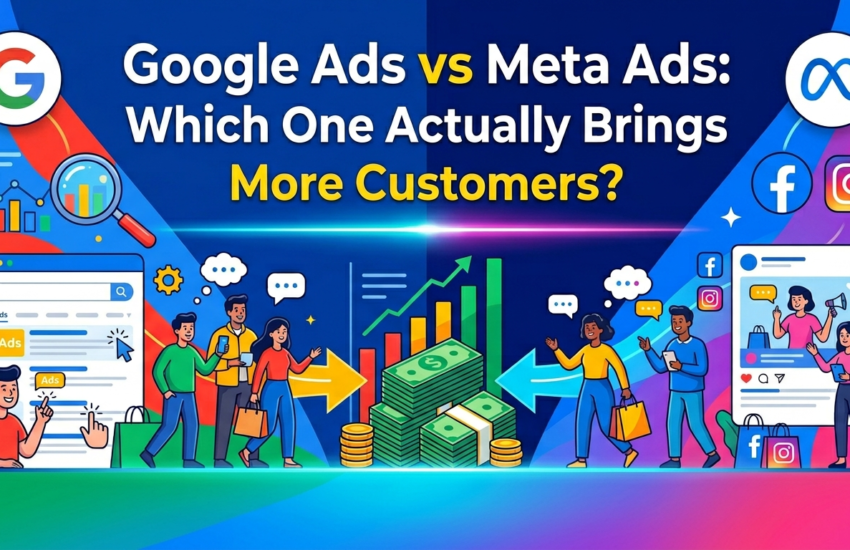
Google Ads vs Meta Ads: Which One Actually Brings More Customers?
For small business owners, startups, and burgeoning brands, the digital marketing landscape often feels like a sprawling, impenetrable jungle. You know you need to be online, but with platforms like Google Ads and Meta Ads (Facebook & Instagram) vying for your attention and budget, the critical question looms: “Which one will actually bring in more customers?” It’s a challenge many face, spending precious resources without a clear return, leading to frustration and stagnant growth. This isn’t just about picking a platform; it’s about understanding the fundamental mechanics of each to make an informed decision that drives tangible results for your business. Stop making common marketing mistakes driven by guesswork, and let’s demystify which advertising giant holds the key to unlocking your customer base.
Understanding Google Ads: Reaching Intent-Driven Customers
Google Ads, formerly Google AdWords, is the world’s largest pay-per-click (PPC) advertising platform. It operates primarily on the principle of intent. When someone types a query into Google, they are actively looking for something – information, a product, a service. Google Ads places your business directly in front of these individuals at their moment of highest intent.
How Google Ads Work
At its core, Google Ads allows you to bid on keywords relevant to your business. When a user searches for those keywords, your ad can appear at the top or bottom of the search results page. Beyond search, Google’s vast network includes display ads across millions of websites, video ads on YouTube, and app promotion ads. This multi-faceted approach ensures a broad reach, but its strength undeniably lies in its search advertising prowess.
Key Benefits for Small Businesses
- High Intent Targeting: You’re reaching people who are already searching for what you offer. This often translates to higher conversion rates for direct sales or lead generation.
- Immediate Visibility: Unlike SEO, which takes time, Google Ads can put your business on the first page of Google almost instantly.
- Measurable Results: Google provides robust analytics, allowing you to track clicks, impressions, conversions, and return on ad spend (ROAS) with precision.
- Local Targeting: Powerful features for businesses serving specific geographic areas, ensuring your ads reach customers nearby.
Potential Drawbacks
- High Competition & Cost: Popular keywords can be very expensive, making it challenging for small businesses with limited budgets to compete.
- Requires Expertise: Effective campaign management, including keyword research, bid strategies, and ad copy optimization, demands a certain level of skill and ongoing attention.
- Limited Audience Reach for Brand Awareness: While excellent for direct response, it’s not always the best platform for initial brand discovery or building widespread awareness if people aren’t actively searching for your niche.
Deciphering Meta Ads: Engaging Your Audience Where They Socialize
Meta Ads, encompassing Facebook, Instagram, Messenger, and Audience Network, operates on a fundamentally different principle: discovery and engagement. People on these platforms aren’t actively searching for a product; they are browsing, connecting, and being entertained. Meta Ads allows you to interrupt their feed with highly targeted advertisements based on their demographics, interests, and behaviors.
How Meta Ads Work
Meta’s advertising strength lies in its unparalleled audience targeting capabilities. Using a treasure trove of user data, you can create hyper-specific custom audiences. Your ads – typically visually rich images or videos – appear natively within users’ feeds, stories, or in-stream video placements. This offers an opportunity to introduce your brand, cultivate desire, and nurture leads over time.
Key Benefits for Small Businesses
- Unrivaled Audience Targeting: Reach very specific demographics, interests, behaviors, custom audiences (e.g., website visitors, customer lists), and lookalike audiences.
- Cost-Effective for Brand Awareness: Often offers lower costs per impression (CPM) than Google Ads, making it excellent for building brand recognition and nurturing leads at scale.
- Visual Storytelling: Ideal for businesses with visually appealing products or services, allowing compelling creatives to capture attention.
- Cultivating Community: Great for building an engaged community around your brand, driving traffic to content, and fostering loyalty.
Potential Drawbacks
- Lower Immediate Intent: Users aren’t necessarily in a buying mindset, meaning conversion cycles can be longer and require more touchpoints.
- Ad Fatigue: Audiences can quickly become desensitized to ads if not refreshed regularly with new creatives and messaging.
- Privacy Changes: Recent changes (like iOS updates) have impacted targeting and tracking capabilities, making attribution more challenging.
- Creative Dependency: Success heavily relies on engaging, high-quality ad creatives and persuasive copy.
The Core Difference: Intent vs. Discovery
The fundamental distinction boils down to user mindset. Google Ads captures existing demand – people with a clear intent to find something. Meta Ads creates demand or taps into latent demand – showing products/services to people who might be interested, even if they weren’t actively looking. Understanding this difference is paramount to avoiding common marketing mistakes and allocating your budget effectively. Are you trying to intercept a ready-to-buy customer, or are you trying to introduce your brand and generate interest?
When to Choose Google Ads
- High-Intent Products/Services: If your offering solves an immediate problem or satisfies a specific need (e.g., “emergency plumber,” “buy running shoes online,” “CRM software”).
- Local Businesses: For driving foot traffic or service inquiries within a specific geographic area.
- Budget Focused on Immediate ROI: When your primary goal is direct conversions and you have a clear understanding of your customer acquisition cost.
- B2B Services: Often performs well for B2B as businesses actively search for solutions.
When to Choose Meta Ads
- Visually Driven Products: Fashion, food, travel, home decor, fitness, and any product that benefits from strong visual appeal.
- Building Brand Awareness & Community: When establishing your brand, telling your story, or growing an engaged audience is a priority.
- Niche Targeting: If you have a very specific audience segment defined by interests, behaviors, or demographics.
- Longer Sales Cycles: For products/services that require more education or nurturing before a purchase decision.
The Power of an Integrated Strategy & Common Marketing Mistakes
The reality for most small businesses isn’t an “either/or” choice but a “both/and” strategy, tailored to their unique goals and budget. Relying solely on one platform without understanding its limitations is a common marketing mistake that stifles growth.
- Mistake 1: Ignoring the Customer Journey: Thinking a single ad click will seal the deal. Customers often interact with multiple touchpoints. Google Ads can capture initial intent, while Meta Ads can re-engage prospects who visited your site (retargeting) or introduce your brand to new, similar audiences.
- Mistake 2: Poor Targeting: Wasting budget by showing ads to the wrong people. Precision targeting is crucial on both platforms.
- Mistake 3: Generic Ad Creative & Copy: In a crowded digital space, your ads must stand out, speak directly to your audience’s pain points, and offer a clear value proposition.
- Mistake 4: Not Tracking & Optimizing: Launching campaigns and letting them run without analysis is akin to throwing darts in the dark. Continuous monitoring, A/B testing, and optimization are non-negotiable.
- Mistake 5: Lack of Cohesive Strategy: Each platform should play a distinct, complementary role in your overall marketing funnel, guiding customers from awareness to conversion.
Stop Guessing, Start Growing: Your Next Step with Thought Hive
Navigating the complexities of Google Ads, Meta Ads, and crafting a winning digital marketing strategy can be overwhelming, especially when you’re focused on running your business. The insights and strategies required to turn ad spend into actual customers aren’t always intuitive. If you’re struggling to generate leads, constantly making marketing mistakes, or simply unsure which platform will yield the best results for your unique brand, it’s time to get expert guidance. At Thought Hive, we specialize in demystifying digital marketing, helping small business owners and startups craft bespoke, data-driven strategies that attract and convert your ideal customers. Don’t let uncertainty cost you more customers.
